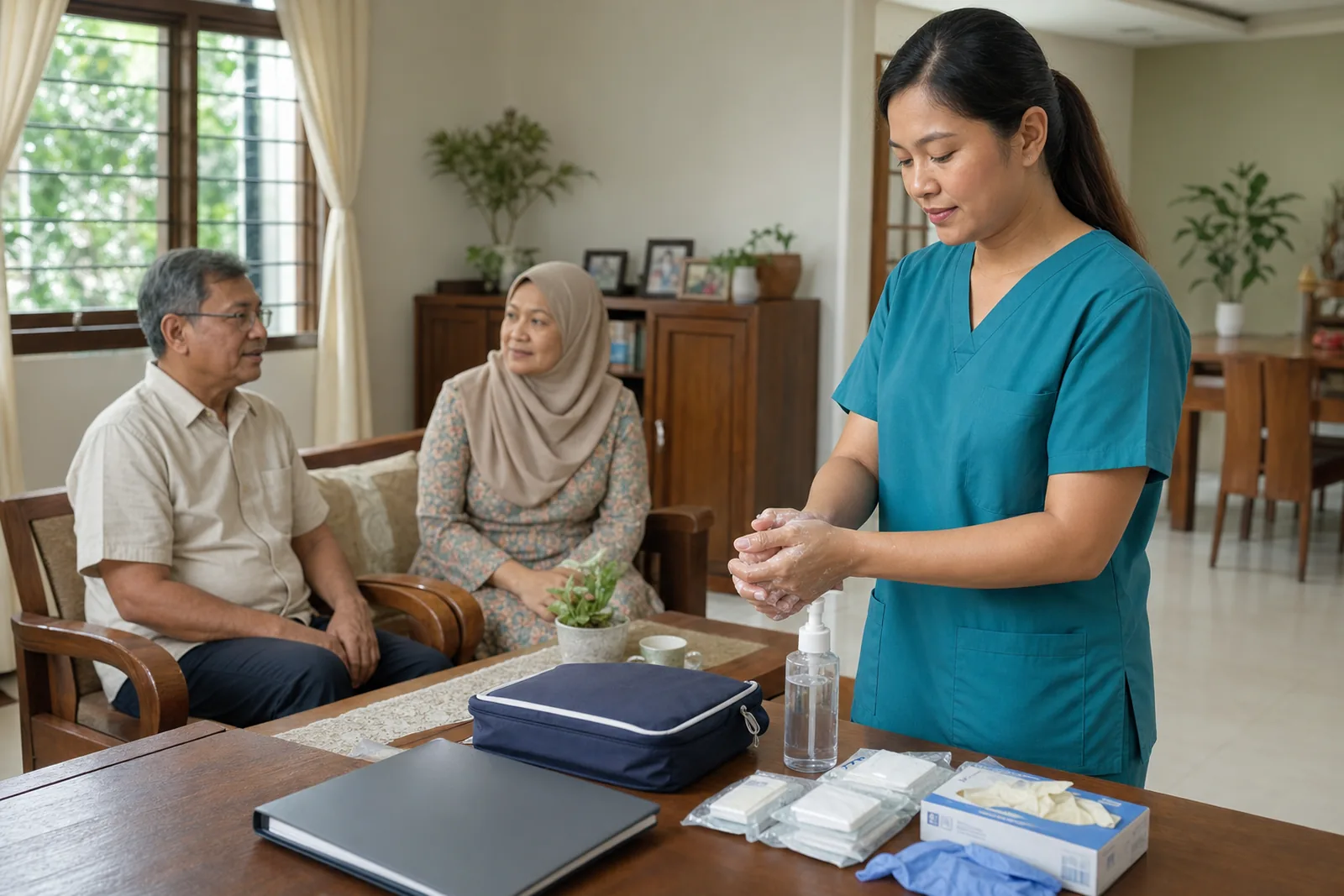
When home nursing may help
Recovery between chemotherapy sessions is shaped by the exact regimen, treatment day, expected blood-count pattern, medicines and the person's usual condition,not by a universal post-chemo routine. Fever or chills during a period of infection risk, breathing difficulty, uncontrolled bleeding, new confusion, collapse, repeated vomiting with inability to retain fluid or another immediate threat needs urgent clinical assessment.
This guide may be useful for
- Adults returning home after intravenous or oral chemotherapy who need skilled observations
- Families coordinating supportive medicines, intake, mouth care and infection precautions
- People with a central line, frailty, unstable symptoms or difficulty following the treatment plan
Anchor every visit to the actual treatment cycle
Record the chemotherapy name if available, intravenous or oral route, cycle and day, latest infusion or tablet dose, planned blood tests and next oncology appointment. Add the treatment centre's expected pattern for fatigue, nausea and falling blood counts rather than applying a generic timetable. Establish the person's usual temperature, alertness, breathing, mouth condition, appetite, bowel pattern, urine, skin and function so a new change is recognisable.
Use one chronological record for temperature, symptoms, food and fluid retained, bowel movements, supportive medicines and response. Ask specifically about chills, sore throat, cough, urinary pain, diarrhoea, new rash, mouth coating, catheter redness and contact with an unwell person. The nurse reports the pattern; only the oncology team interprets blood results, delays treatment or changes the cancer regimen.
Make supportive care executable without masking danger
compare and resolve scheduled and as-needed anti-sickness, pain, bowel, mouth-care and other supportive medicines with their purpose, permitted timing, maximum prescribed use and the action when they fail. Check whether tablets can be swallowed and retained. Record vomiting and diarrhoea by time and amount, thirst, dizziness, urine and weight or function changes. Use the individual food-safety and hydration advice; avoid unapproved supplements or traditional products that may interact with treatment.
Inspect lips, tongue, gums and oral lining with consent for dryness, ulcers, coating, bleeding or pain, and use only the prescribed rinses and technique. Support small meals, fluids and oral care around nausea and taste change. Uncontrolled vomiting, inability to retain fluid, severe diarrhoea, new confusion or rapidly declining function warrants prompt oncology contact or urgent assessment according to the plan rather than another routine visit.
Protect against infection, bleeding and line complications
The infection-risk period differs by regimen. Keep the oncology team's written temperature threshold and 24-hour number visible, ensure a working thermometer is available and teach the household not to wait for dramatic symptoms. Follow hand hygiene and food-safety instructions and reduce avoidable exposure to illness without imposing unsupported isolation. Check skin, mouth, urine and any catheter site because infection can begin in several places.
Where line or port care is ordered, verify the device, dressing date, permitted access, flushing product and volume, clamp sequence and complication route before touching it. Observe for pain, redness, swelling, discharge, leakage, damage or a changed external length. Also note unexpected bruising, pinpoint spots, nose or gum bleeding, blood in urine or stool and prolonged bleeding. Fever during infection risk, uncontrolled bleeding, collapse or breathing difficulty needs urgent clinical action.
Primary sources
These sources support the general principles on this page. The individual treating team’s instructions take priority.
- Nursing Division, Ministry of Health Malaysia: Registration and Annual Practising Certificate (APC)Malaysia · regulator guidance
- Nursing Division, Ministry of Health Malaysia: Acts and guidelines for nursing practiceMalaysia · regulator guidance
- World Health Organization: Standard precautions in health careInternational · infection-prevention guidance
- National Cancer Institute: Chemotherapy to Treat CancerInternational or source jurisdiction; general principles only · authoritative public guidance
- National Cancer Institute: Infection and Neutropenia during Cancer TreatmentInternational or source jurisdiction; general principles only · authoritative public guidance
Sources checked: 2026-08-02
What to consider before arranging a visit
Support that may be relevant
- Treatment-cycle and symptom timeline
- Oncology-defined fever and infection route
- Supportive medicines, mouth care and intake
- Central-line or port observations within orders
What to prepare and confirm
- Schedule visits around the regimen's expected problems and skilled tasks
- Confirm the oncology team's exact same-day and after-hours contact route
- Decide who records temperature, intake, bowel symptoms and medicines between visits
- Separate authorised line care from tasks that remain with the treatment centre
Discuss nursing needs for chemotherapy recovery home nursing
The WhatsApp message mentions this page and leaves space for your location. An enquiry is not a booking; the provider must confirm identity, suitability, scope, timing, supplies and fees.
Do not send an identity-card number, full medical record or identifiable wound photograph during first contact.
Discuss nursing needs for chemotherapy recovery home nursingSafety boundaries and when to seek other care
- Do not take fever-reducing medicine to hide a temperature before following the oncology team's instructions
- Do not assume every chemotherapy patient has the same low-count days, diet restrictions or isolation needs
- Do not flush, access, remove or redress a central line or port outside current orders and competency
Call 999 for immediate danger or a medical emergency. This website and its WhatsApp enquiries do not provide emergency triage.
Questions families ask
Can the nurse decide whether the next chemotherapy session should proceed?
No. The nurse can document symptoms and observations and contact the oncology team; treatment readiness and blood-result decisions belong to that team.
Does every fever after chemotherapy need the same response?
Use the treating centre's written threshold and urgent pathway. Infection during some parts of a chemotherapy cycle can become life threatening, so do not wait or mask a fever.