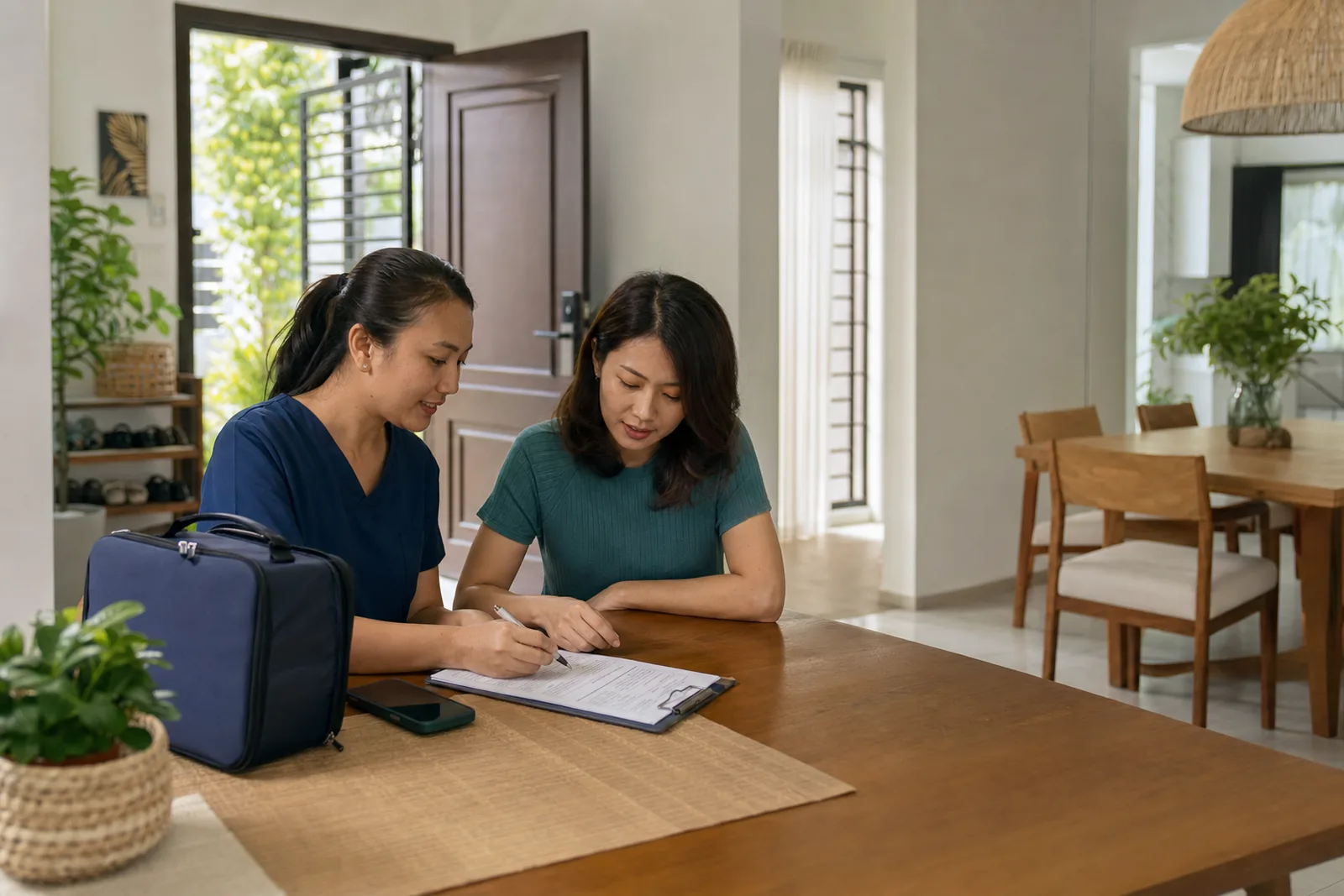
Portable Home-Nursing Workstation Readiness
Pack from the visit task list, not from habit. Use closed labelled compartments for protected clean stock, patient-specific items, documentation or devices, used reusable equipment and waste. At the home, identify a dry stable wipeable surface away from food, pets, fans, children and splash; place a clean barrier if the protocol requires it. Perform hand hygiene before opening the clean zone, remove only the next items, and never reach back into it with used gloves. Close and remove waste by the authorised route, isolate reusable equipment after use, clean the external bag surfaces as specified and restock only in the designated clean area after discrepancies are recorded.
Who this guide is for
- Nurses performing procedures in shared household rooms
- Families preparing a clean work surface before visits
- Care coordinators managing reusable devices and visit stock
Pack to the confirmed task and likely interruption
Use the current order and visit plan to calculate exact sterile items, clean accessories, protective equipment, medication checks, measuring devices, cleaning materials and waste containers. Verify size, connector, expiry and package integrity while packing. Patient-owned medicine remains identified as patient stock and is reconciled at the home rather than absorbed into provider inventory.
Place only an evidence-based reserve in the protected compartment. Overpacking makes inspection harder and increases the amount exposed when a bag is opened. Keep a sealed contingency module for a defined likely problem, but an unexpected clinical deterioration should trigger assessment and escalation rather than improvised treatment from miscellaneous stock.
- Order-linked item list
- Identity and expiry check
- Patient stock kept distinct
- Defined contingency module
Establish a clean field in a non-clinical room
Ask before moving household objects, then inspect the proposed surface for moisture, dust, food residue, pests, airflow, child or pet access and proximity to waste. Clean or protect it according to protocol and define separate positions for unopened supplies, active task items and used material. The patient bed is not automatically a clean work surface.
Sequence the task before opening packages. Perform hand hygiene, open the protected compartment, remove the immediate set and close it. Place records and communication devices outside the procedure zone. If an item falls, becomes wet or crosses into the used zone, quarantine it rather than returning it to clean stock.
- Household surface assessment
- Three visible work zones
- Minimal items exposed
- Crossed item quarantined
Close the visit without carrying contamination forward
At task completion, close sharps and waste at the point of use and follow the authorised disposal arrangement. Put reusable instruments and monitoring devices into a sealed, clearly marked used-equipment container without contaminating its handle or the clean compartment. Wipe external high-touch surfaces using the specified compatible method.
Record used, missing, damaged, opened or patient-retained items before restocking. Decontaminate reusable equipment through its approved process and release it back to clean storage only after completion. Restock in a designated clean area, inspect the bag for damage and investigate any unexplained inventory difference before the next home.
- Point-of-use waste closure
- Sealed used-equipment return
- Post-visit discrepancy record
- Clean-area release and restock
Primary sources
Sources support general principles; the individual treating team’s instructions take priority.
What matters before arranging a visit
Support that may be relevant
- Task-specific packing list
- Physically separated clean and used zones
- Assessed wipeable work surface
- One-way procedure flow
- Controlled return and restock
How a home visit is planned
- What the confirmed task requires
- Which compartment each item enters
- Where the clean field can be protected
- How used equipment leaves the home
- Where discrepancies and restock are controlled
Ask about portable clean workstation for home nursing visits at home
The WhatsApp message mentions this page and leaves space for your city or suburb. The provider must confirm suitability, scope, timing and fees before any visit.
Ask on WhatsAppSafety boundaries and escalation
- Do not place clean supplies directly on a bed, floor, food surface or visibly contaminated table
- Do not return used equipment or opened patient items to the protected clean compartment
- Do not handle records, phones or door handles with procedure-contaminated gloves
This website is not an emergency service. Call 999 if someone has severe breathing difficulty, chest pain, heavy bleeding, sudden weakness, loss of consciousness or rapid deterioration.
Questions families often ask
Can a dining table be used for nursing supplies?
Only after the surface and surrounding risks are assessed and it is cleaned or protected according to the task protocol; food and household items must be separated.
Can unused opened items return to the visit bag?
Not automatically. Patient exposure, packaging status and the provider protocol determine whether they are discarded, left for the patient or quarantined.
Updated: 29 July 2026 • Sources and clinical instructions must be confirmed for each case.