Cannot Be Left Alone at Home: Supervision Planning
Test the shortest realistic period alone: can the person recognise a problem, avoid the hazard, use the phone or alert, state the address, wait safely and permit authorised entry? Add medicines, toileting, transfers, eating, swallowing, oxygen or other devices, wandering, cooking and sudden symptoms. If one failure could cause serious harm before help arrives, continuous or very close supervision may be required. A nurse can assess and perform agreed clinical tasks during visits; supervision outside those visits needs a named family or caregiver coverage plan.
Who this guide is for
- Adults whose safety between visits is uncertain
- Families deciding whether check-ins or continuous coverage are needed
- Discharge teams planning a safe return home
Replace the label with observable evidence
List the exact events that prompted concern: leaving heat on, taking repeated doses, falling without an alert, choking, pulling a device, opening the door to strangers, walking out, becoming distressed, failing to recognise danger or being unable to call for help. Add frequency, time of day, trigger, consequence and whether a prompt changed the outcome. One broad label hides different solutions.
Assess what happens during the actual gap between helpers. Can the person transfer, toilet, obtain a safe drink or meal, follow medicine instructions, manage a device alarm, orient to place and summon help? Consider hearing, speech, vision, hand control, phone charging, signal, language and the ability to state the address. Use supported observation rather than an unsafe unattended trial.
Match supervision to speed and severity of risk
For each credible event, estimate how quickly harm could occur and how quickly a named responder can notice, reach the home and enter. A daily phone call cannot manage a fall that needs help within minutes. A camera cannot prevent choking, and a wearable alert cannot help if it is removed, uncharged or not understood. Test every tool with the real user and responder.
Use the least restrictive option that works consistently: scheduled check-ins for low-speed risks, a nearby responder for time-sensitive assistance, direct line-of-sight support for hazardous tasks, or continuous presence when serious unpredictable events recur. Preserve private time and safe independent tasks. Record why the chosen level is necessary and when it will be reviewed.
Build coverage that survives ordinary disruption
Create a seven-day roster showing who is physically present or responding during every risk period, including nights, bathing, meals, medicines and caregiver travel. Name a backup for illness, traffic, work changes and family fatigue. Document authorised entry, keys, pets, emergency information and who decides when the person cannot be reached.
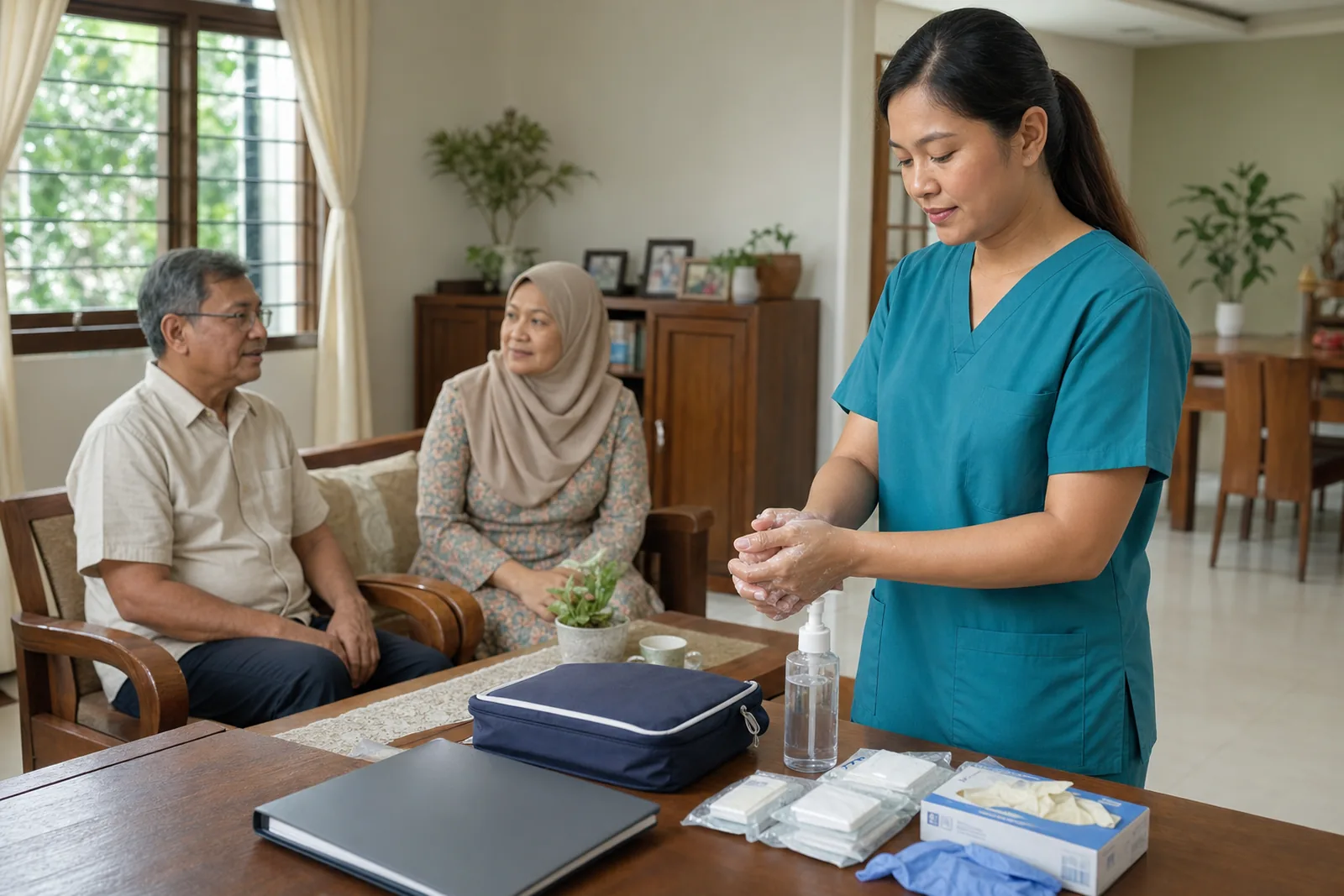
Professional home nursing covers assessed clinical tasks such as wounds, medicines, devices, observations and teaching during agreed visits. It does not silently include companionship or continuous watching. If direct supervision is required outside visit times, arrange family or caregiver coverage and protect carers with handovers, sleep and relief. Review after illness, a near miss or any change in ability.
Primary sources
Sources support general principles; the individual treating team’s instructions take priority.
What matters before arranging a visit
Support that may be relevant
- Real-world alone-time test
- Hazard, response and rescue-time map
- Coverage roster for every uncovered period
- Clear nursing-versus-supervision boundary
How a home visit is planned
- Define the specific event that makes being alone unsafe
- Estimate whether help can arrive before serious harm occurs
- Choose the least restrictive reliable level of observation
- Assign primary, backup and emergency coverage for each period
Ask about Cannot be left alone home-supervision planning at home
The WhatsApp message mentions this page and leaves space for your city or suburb. The provider must confirm suitability, scope, timing and fees before any visit.
Ask on WhatsAppSafety boundaries and escalation
- Do not test high-risk independence by deliberately leaving the person without a responder
- Treat sudden confusion, new weakness, breathing distress, seizure, significant injury or reduced consciousness as urgent
- Do not use locked doors, restraint or surveillance without lawful consent, necessity and a response plan
This website is not an emergency service. Call 999 if someone has severe breathing difficulty, chest pain, heavy bleeding, sudden weakness, loss of consciousness or rapid deterioration.
Questions families often ask
Does dementia automatically mean someone cannot be left alone?
No. Decisions should follow actual abilities, hazards, response capacity and preferences. Some people manage defined periods with reliable safeguards; others need close or continuous support because serious risks recur.
Can several nursing visits replace continuous supervision?
Not if dangerous events can happen between visits and require an immediate response. Nursing visits and continuous supervision are different forms of support and must be planned separately.
Updated: 29 July 2026 • Sources and clinical instructions must be confirmed for each case.