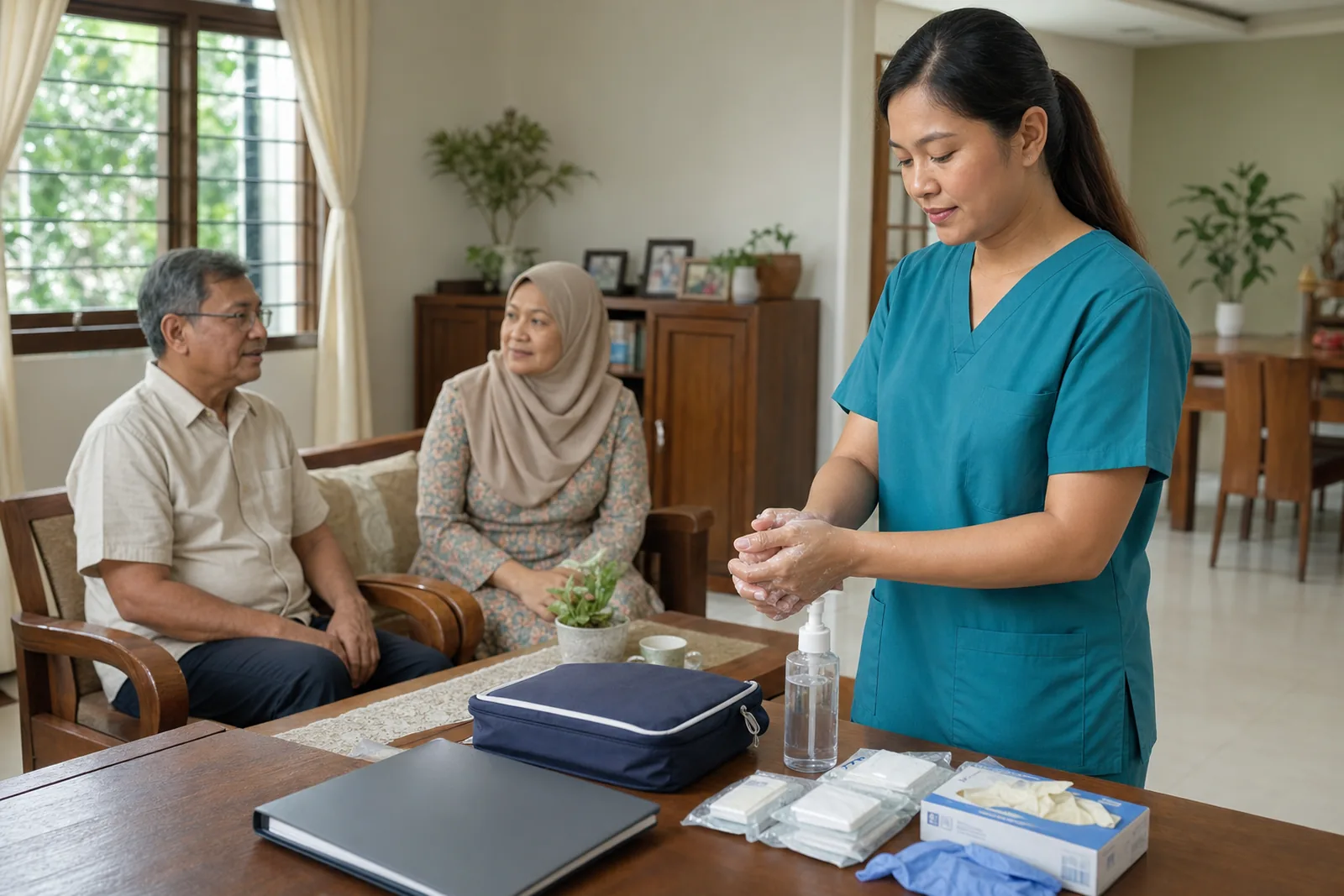
When home nursing may help
Radiotherapy effects follow the body area treated, dose and schedule, other cancer treatment and the person's usual condition. Contact the team promptly for a rapidly worsening field reaction, wet or broken skin, uncontrolled pain, inability to swallow or retain fluid, severe diarrhoea, new breathing difficulty or symptoms outside the written plan; collapse or another immediate threat requires emergency help.
This guide may be useful for
- Adults receiving a course of external-beam radiotherapy who need skilled home observations
- People whose treatment area affects skin, mouth, swallowing, bowel, bladder or breathing
- Families managing fatigue, transport, nutrition and other treatment alongside radiotherapy
Start with the treatment field, not a generic side-effect list
Record the exact body area, treatment start and planned finish, fractions completed, other chemotherapy or surgery, expected effects given by the centre and the person's usual condition. A head-and-neck course may require mouth, saliva, swallowing and weight observation; a pelvic course may centre on bowel, bladder and skin changes; chest treatment may require cough, swallowing and breathing review. Use only the instructions for that person's field.
Build a treatment-day timeline: appointment and travel, food and fluid, medicines, fatigue before and after, pain, sleep and ability to wash, dress and move. Note whether recovery changes across the week and whether the person can reach the next session safely. Nursing supports the prescribed pathway; a missed appointment, sudden decline or inability to travel is reported to the centre rather than quietly removed from the schedule.
Protect skin and sensitive tissues according to centre instructions
Inspect the treated skin only with consent and adequate privacy. Record colour, warmth, dryness, itching, tenderness, swelling, blistering, peeling, moisture, broken areas and discharge, comparing with the previous visit. Follow the centre's washing, drying, clothing, deodorant, shaving, sun and product advice because recommendations vary by field and technique. Preserve treatment marks and avoid friction, pressure and adhesive unless specifically approved.
For head, neck or upper digestive fields, connect mouth care with saliva, taste, pain, ulcers, dentures, swallowing, cough during meals, voice and weight. For pelvic or abdominal fields, connect skin observations with stool frequency, urgency, bleeding, urine symptoms, nausea and hydration. The nurse uses authorised rinses, dressings and medicines and contacts the radiotherapy team when the current plan no longer protects intake, skin integrity or comfort.
Plan fatigue and recovery beyond the final session
Radiotherapy fatigue may build through the course and is not always relieved by sleep. Track what the person can actually do: showering, preparing food, walking to transport, attending treatment and recovering afterward. Balance planned rest with safe activity within the clinical plan, organise help for meals and travel, and look for treatable contributors such as poor intake, pain, sleep disruption, infection or effects of combined treatment instead of labelling every decline as fatigue.
Explain that some reactions can continue briefly after treatment and some late effects appear later, but do not predict an individual timeline. Keep the final review, contact route and written aftercare available. New or worsening swelling, skin breakdown, swallowing problems, cough, breathlessness, bowel or bladder symptoms, pain or functional loss after the course still needs assessment. Severe dehydration, uncontrolled pain, respiratory distress, heavy bleeding, collapse or confusion is beyond routine home nursing.
Primary sources
These sources support the general principles on this page. The individual treating team’s instructions take priority.
- Nursing Division, Ministry of Health Malaysia: Registration and Annual Practising Certificate (APC)Malaysia · regulator guidance
- Nursing Division, Ministry of Health Malaysia: Acts and guidelines for nursing practiceMalaysia · regulator guidance
- World Health Organization: Standard precautions in health careInternational · infection-prevention guidance
- National Cancer Institute: Radiation Therapy Side EffectsInternational or source jurisdiction; general principles only · authoritative public guidance
- National Cancer Institute: Cancer FatigueInternational or source jurisdiction; general principles only · authoritative public guidance
Sources checked: 2026-08-02
What to consider before arranging a visit
Support that may be relevant
- Treatment site and day-specific record
- Field-specific skin and hygiene instructions
- Fatigue, nutrition and attendance planning
- Early route for worsening or late effects
What to prepare and confirm
- Match visits to the body area treated and actual skilled task
- Confirm which skin products, dressings and washing methods the centre permits
- Plan transport and energy so symptoms do not silently interrupt treatment
- Name the contact for effects arising during and after the course
Discuss nursing needs for radiotherapy recovery home nursing
The WhatsApp message mentions this page and leaves space for your location. An enquiry is not a booking; the provider must confirm identity, suitability, scope, timing, supplies and fees.
Do not send an identity-card number, full medical record or identifiable wound photograph during first contact.
Discuss nursing needs for radiotherapy recovery home nursingSafety boundaries and when to seek other care
- Do not scrub off treatment markings or place unapproved creams, powders, heat, ice or adhesive over the field
- Do not assume all redness, pain, diarrhoea, swallowing difficulty or breathlessness is an expected reaction
- Do not advise stopping or missing radiotherapy; route attendance problems to the treatment centre
Call 999 for immediate danger or a medical emergency. This website and its WhatsApp enquiries do not provide emergency triage.
Questions families ask
Can any moisturiser be used on the treated skin?
Use only products and timing permitted by the radiotherapy centre. Advice varies, and some products or dressings may interfere with treatment or irritate damaged skin.
Should radiotherapy stop when fatigue or skin soreness worsens?
Do not make that decision at home. Report the problem promptly so the treatment team can assess the reaction, provide care and decide about the schedule.