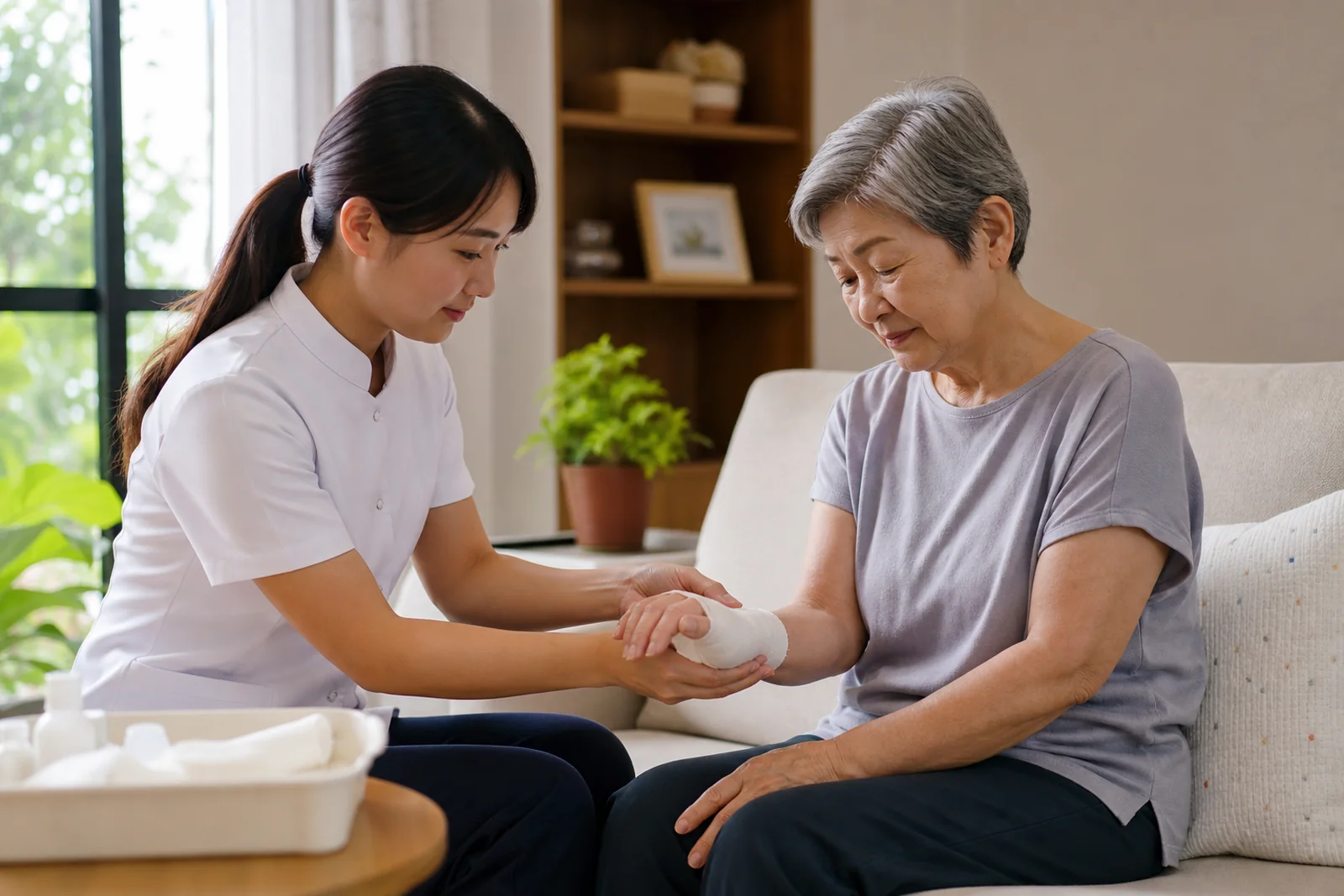
Is this suitable for a home visit?
Home nursing removes sutures once the treating team confirms the wound has healed enough, checking the site rather than just the calendar. If authorisation or readiness is uncertain, the nurse should contact the treating team before removal.
Verify the closure before opening a kit
Record who performed the procedure, date and site, wound-care instructions, closure material, expected number, whether removal is complete or staged and the named contact for uncertainty. Confirm factors that may delay healing, including diabetes, steroid or immune-suppressing treatment, circulation problems, infection and previous wound separation.
A calendar estimate is not authorisation. If documents conflict, the wound was recently reviewed for a problem or the closure is not clearly identifiable, pause and obtain direction.
- Treating-team instruction
- Exact site and closure
- Expected number and staged plan
- Healing risks and escalation contact
Assessment decides whether removal continues
Provide lighting, privacy and a stable position. Inspect the whole line for edge approximation, redness, swelling, discharge, bleeding, tenderness and embedded material. Count visible sutures and compare with documentation before removal.
Use the authorised method systematically, avoiding pulling contaminated external material through tissue. If edges begin to separate, bleeding is unexpected, the count differs or removal is difficult, stop, support the area as ordered and contact the responsible service.
- Inspect before removal
- Count before and after
- Use the correct instrument and technique
- Stop rather than force completion
Protect healing after the surface closure is removed
Follow instructions for adhesive strips, dressing, showering, movement and lifting. Explain what mild sensations may occur and which changes, widening, fresh bleeding, discharge, fever, spreading redness or worsening pain, need prompt review.
Document material removed, wound condition, products applied, advice and follow-up. Keep the planned appointment because deeper healing, pathology, implants and activity progression may require assessment beyond the skin.
Primary sources
These sources support the general principles on this page. The individual treating team’s instructions take priority.
- Nursing Division, Ministry of Health Malaysia: Registration and Annual Practising Certificate (APC)Malaysia · regulator guidance
- Nursing Division, Ministry of Health Malaysia: Acts and guidelines for nursing practiceMalaysia · regulator guidance
- National Institute for Health and Care Excellence: Surgical site infections: prevention and treatmentUnited Kingdom; general clinical principles · clinical guideline
- MyHEALTH, Ministry of Health Malaysia: Post-operative patient informationMalaysia · official public information
- NHS: Recovery after surgeryInternational or source jurisdiction; general principles only · authoritative public guidance
Sources checked: 2026-08-02
What to consider before arranging a visit
Support that may be relevant
- Verify site, closure, date, count and removal instruction
- Inspect approximation, drainage, pain and surrounding skin
- Use the correct sterile or clean technique required by the plan
- Count removed material and document the result
What to prepare and confirm
- Clarify whether all, alternate or selected sutures are to be removed
- Ask whether adhesive strips or another dressing are ordered
- Keep the scheduled review after removal
- Prepare good lighting, privacy and the original documents
Ask about suture removal
Send a WhatsApp message and our team will help you arrange a home nurse visit. It notes this page and leaves room for your area. The nurse or provider confirms suitability, timing and fees before any visit.
To protect privacy, please don’t send an identity-card number, full medical record or an identifiable wound photo in your first message.
Ask about suture removalSafety boundaries and when to seek other care
- Do not remove sutures early or remove an unfamiliar closure by guesswork
- Do not dig for retained material or force removal when a suture is embedded
- Surface closure does not prove that deeper tissue is fully healed or activity restrictions have ended
Call 999 for immediate danger or a medical emergency. This website and its WhatsApp enquiries do not provide emergency triage.
Questions families ask
Can the nurse choose the removal date?
The treating team should confirm timing because operation, body site, closure, healing and individual risk differ.
Are dissolvable sutures removed?
Many are intended to absorb, but exposed ends or problems may need review. Identify the material and follow the treating team’s instruction rather than pulling it.