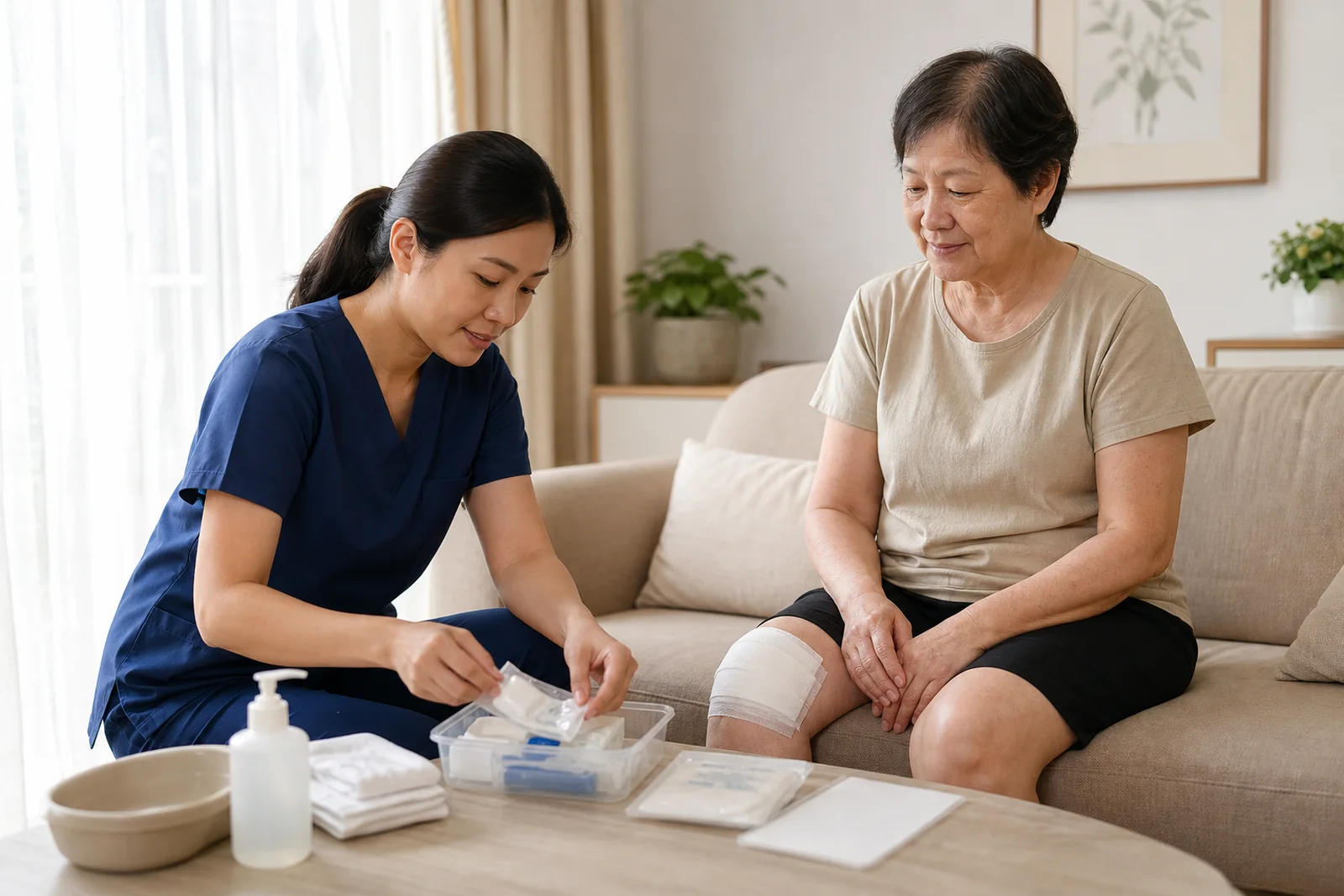
Is this suitable for a home visit?
When someone at home needs regular wound care, a trained nurse can take that job off your shoulders. Before the visit, our team helps you gather the key facts.
Know the kind of wound before booking a dressing
A surgical cut, a pressure sore, a diabetic foot wound, an injury, a leg ulcer and a moisture rash each need a different path. Have the diagnosis or likely cause, the first assessment, any tests, the current treatment order and the review date ready. If no one knows the cause yet, assessment comes first.
The nurse also looks at the whole person. This means circulation, diabetes, pressure and movement, swelling and continence. It also means food and fluids, smoking, immune health, allergies, pain and any medicines that affect bleeding or healing. These often shape healing more than the brand of dressing.
- Cause and the clinician in charge
- Current wound and dressing order
- Relevant medical and daily-life factors
- Review and follow-up date
What a visit usually includes
The nurse confirms who the person is, gains consent, and asks about pain and any changes since the last review. The old dressing is looked at before removal, a clean area is prepared, and cleaning and dressing follow the order while keeping the wound covered and warm. Privacy is protected and waste is thrown away safely.
The nurse records the location, size where useful, tissue, fluid, smell, wound edge, nearby skin and pain the same way each time. Photos are taken only with clear consent, kept securely and used for a clinical reason. A good record separates what was seen from what it might mean.
- The person is checked before the wound
- Ordered products and method are used
- Change is measured the same way each time
- Action and response are written down
Staying safe between visits
The nurse explains how to keep the dressing protected, what leaking through means in this plan, and which products must not be added. Keep supplies clean, dry and within reach; do not reuse single-use items or swap in household materials without being told to.
Your family is given a clear list of who to call, and when, for bleeding, fever, rising pain, spreading redness, a new smell or discharge, dark tissue, swelling or loss of function. The next clinical review is set by the wound's needs, not simply the next free home visit.
Primary sources
These sources support the general principles on this page. The individual treating team’s instructions take priority.
- Nursing Division, Ministry of Health Malaysia: Registration and Annual Practising Certificate (APC)Malaysia · regulator guidance
- Nursing Division, Ministry of Health Malaysia: Acts and guidelines for nursing practiceMalaysia · regulator guidance
- National Institute for Health and Care Excellence: Pressure ulcers: prevention and managementUnited Kingdom; general clinical principles · clinical guideline
- World Health Organization: Patient safety resourcesInternational or source jurisdiction; general principles only · authoritative public guidance
Sources checked: 2026-08-02
What to consider before arranging a visit
Support that may be relevant
- Confirm what caused the wound and who is the clinician in charge
- The nurse checks pain, tissue, fluid, smell, edges and nearby skin
- The ordered cleaning and dressing method is followed
- Changes are measured over time and a real deterioration is flagged
What to prepare and confirm
- Ask why the wound exists, not only which dressing is used
- Keep one dated plan and a full list of products
- Agree how progress will be measured and reviewed
- Confirm who supplies dressings and who to call after hours
Ask about wound dressing
Send a WhatsApp message and our team will help you arrange a home nurse visit. It notes this page and leaves room for your area. The nurse or provider confirms suitability, timing and fees before any visit.
To protect privacy, please don’t send an identity-card number, full medical record or an identifiable wound photo in your first message.
Ask about wound dressingSafety boundaries and when to seek other care
- Call 999 for life-threatening bleeding, collapse or another immediate threat
- Debridement, compression or invasive exploration is done only after assessment and by trained staff, never at home by the family
- When a wound is worsening or the cause is unaddressed, repeating the same dressing is not the answer
Call 999 for immediate danger or a medical emergency. This website and its WhatsApp enquiries do not provide emergency triage.
Questions families ask
Can the nurse choose a new dressing product during the visit?
The nurse may spot a problem and recommend a review, but a real change should follow the responsible service's clinical plan rather than being decided on the spot.
How often should a wound be dressed?
It depends on the wound, how much it leaks, the product, the surrounding skin and the current order. Changing too often can hurt the wound; leaving it too long can let it leak or become dirty.