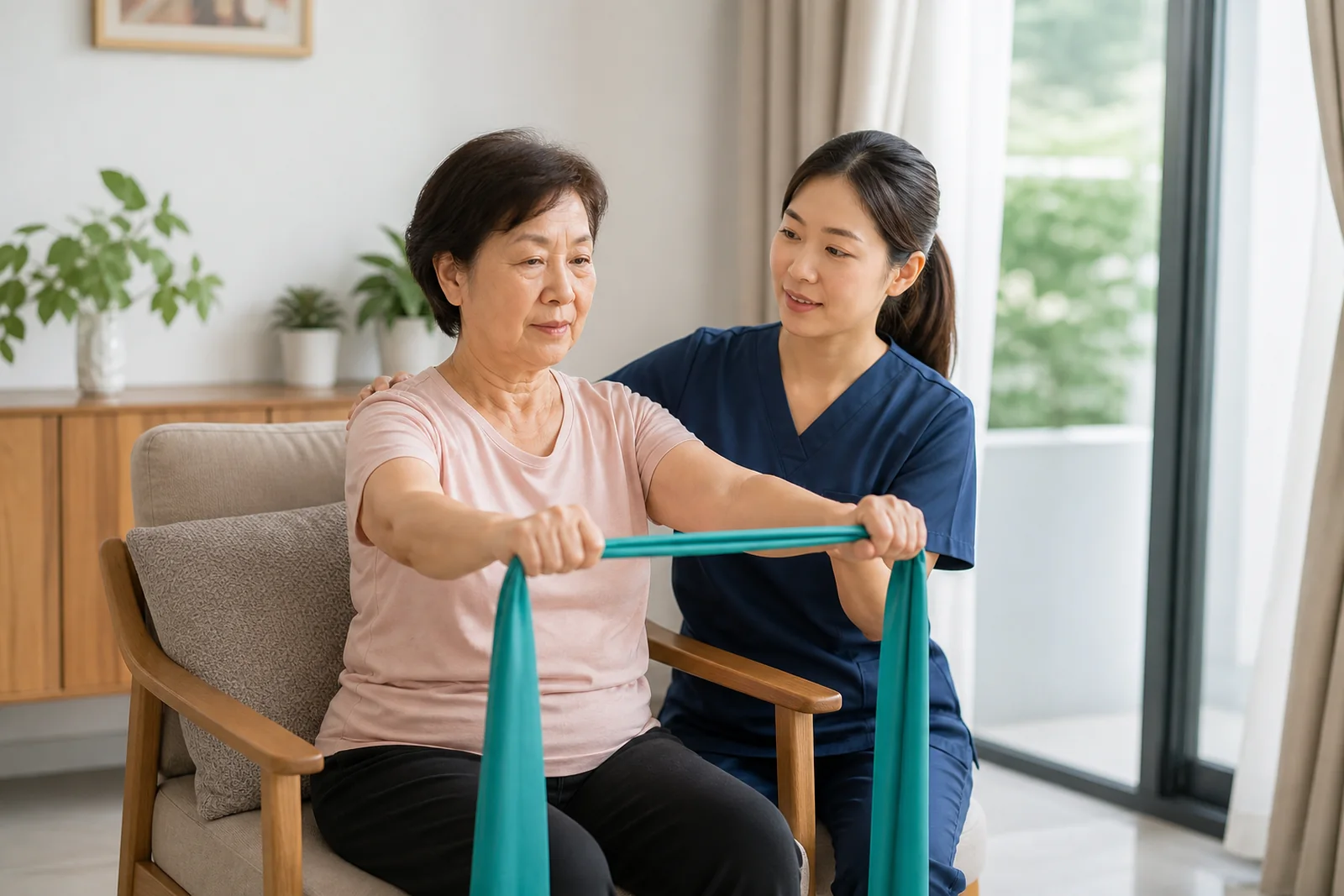
How nursing and rehabilitation work together
Home nursing and rehabilitation each do a different job in recovery, and together they help your relative regain strength at home. Note the therapy goals, prescribed restrictions and equipment.
Build one map of roles and daily work
Write a 24-hour picture of medicines, observations, wounds or devices and meals. Include toileting, transfers, communication and prescribed practice. Add rest and sleep. Mark the responsible role for each item. That role may be the patient, family, nurse, physiotherapist or occupational therapist. It may also be the speech-language therapist, dietitian, doctor, supplier or emergency service. A shared goal does not erase professional boundaries.
Record how often each professional attends and what happens between visits. If a nurse observes a new mobility problem, the nurse documents and escalates it rather than inventing an exercise programme. If a therapist sees wound, breathing, medicine or device concerns, the treating or nursing contact must receive the change. Name the communication route rather than assuming teams automatically share records.
- Full-day task map
- Professional owner per task
- Between-visit assistance
- Named cross-team communication
Connect clinical readiness to functional practice
Function can vary with blood pressure, pain, breathlessness and glucose. It can also vary with infection, sleep, nutrition and bowel or bladder problems. Medicines and emotional distress play a part too. Before movement or self-care practice, follow the individual checks and restrictions. A target such as walking farther is unsafe if it ignores a new fever, dizziness, oxygen problem, wound restriction or weight-bearing instruction.
Use measures that matter: assistance needed to turn, stand or toilet; distance or duration under the assessed plan; fatigue and recovery time; safe swallowing or communication strategies; confidence; and family workload. Track enough information to distinguish normal practice variation from deterioration. Progress is not simply completing more repetitions.
- Individual readiness checks
- Current restrictions and precautions
- Meaningful function measures
- Recovery and workload evidence
Make the home and equipment support the plan
Observe the actual bed, chair, toilet, bathroom, doorway, steps and route used at the required time of day. Equipment must fit the person, task and home after professional assessment. A walking aid, hoist, wheelchair, commode, pressure surface or grab rail is not safe merely because it can be purchased. Confirm setup, maintenance, charging and who has been trained.
Plan the next review before discharge from a service. State what achievement, plateau, new dependency, fall, hospital visit, wound, pain or caregiver strain triggers reassessment. Keep an alternative if a clinician is absent or equipment fails. The aim is a sustainable home routine that preserves dignity and participation while clinical risks remain visible.
- Real-route home observation
- Assessed equipment fit
- Training and maintenance owner
- Review and service-transition trigger
Primary sources
These sources support the general principles on this page. The individual treating team’s instructions take priority.
- Nursing Division, Ministry of Health Malaysia: Registration and Annual Practising Certificate (APC)Malaysia · regulator guidance
- Nursing Division, Ministry of Health Malaysia: Acts and guidelines for nursing practiceMalaysia · regulator guidance
- National Institute for Health and Care Excellence: Falls: assessment and preventionUnited Kingdom; general clinical principles · clinical guideline
- World Health Organization: Rehabilitation in health systemsInternational or source jurisdiction; general principles only · authoritative public guidance
Sources checked: 2026-08-02
What to consider before arranging a visit
Support that may be relevant
- Separate nursing and therapy responsibilities
- Link clinical stability with functional goals
- Use assessed equipment and transfer methods
- Share changes through one current plan
What to prepare and confirm
- Assign a professional owner to every task
- Confirm safe assistance between visits
- Choose measures meaningful to the patient
- Reassess after clinical or functional change
Ask about home rehabilitation and nursing coordination
Send a WhatsApp message and our team will help you arrange a home nurse visit. It notes this page and leaves room for your area. The nurse or provider confirms suitability, timing and fees before any visit.
To protect privacy, please don’t send an identity-card number, full medical record or an identifiable wound photo in your first message.
Ask about home rehabilitation and nursing coordinationSafety boundaries and when to seek other care
- New chest pain, severe breathlessness, sudden neurological change or collapse needs urgent medical assessment
- Do not copy exercises, transfers or equipment settings from another patient
- Fatigue, pain, delirium, infection and medicine effects can change safe performance
Call 999 for immediate danger or a medical emergency. This website and its WhatsApp enquiries do not provide emergency triage.
Questions families ask
Can a home nurse provide all rehabilitation?
No. A nurse provides nursing within assessed competence. Rehabilitation disciplines retain their own assessment, treatment and equipment responsibilities.
Who should coordinate several professionals?
Name one coordinator and a main clinical contact for each issue. The coordinator organises information but does not replace professional accountability.